



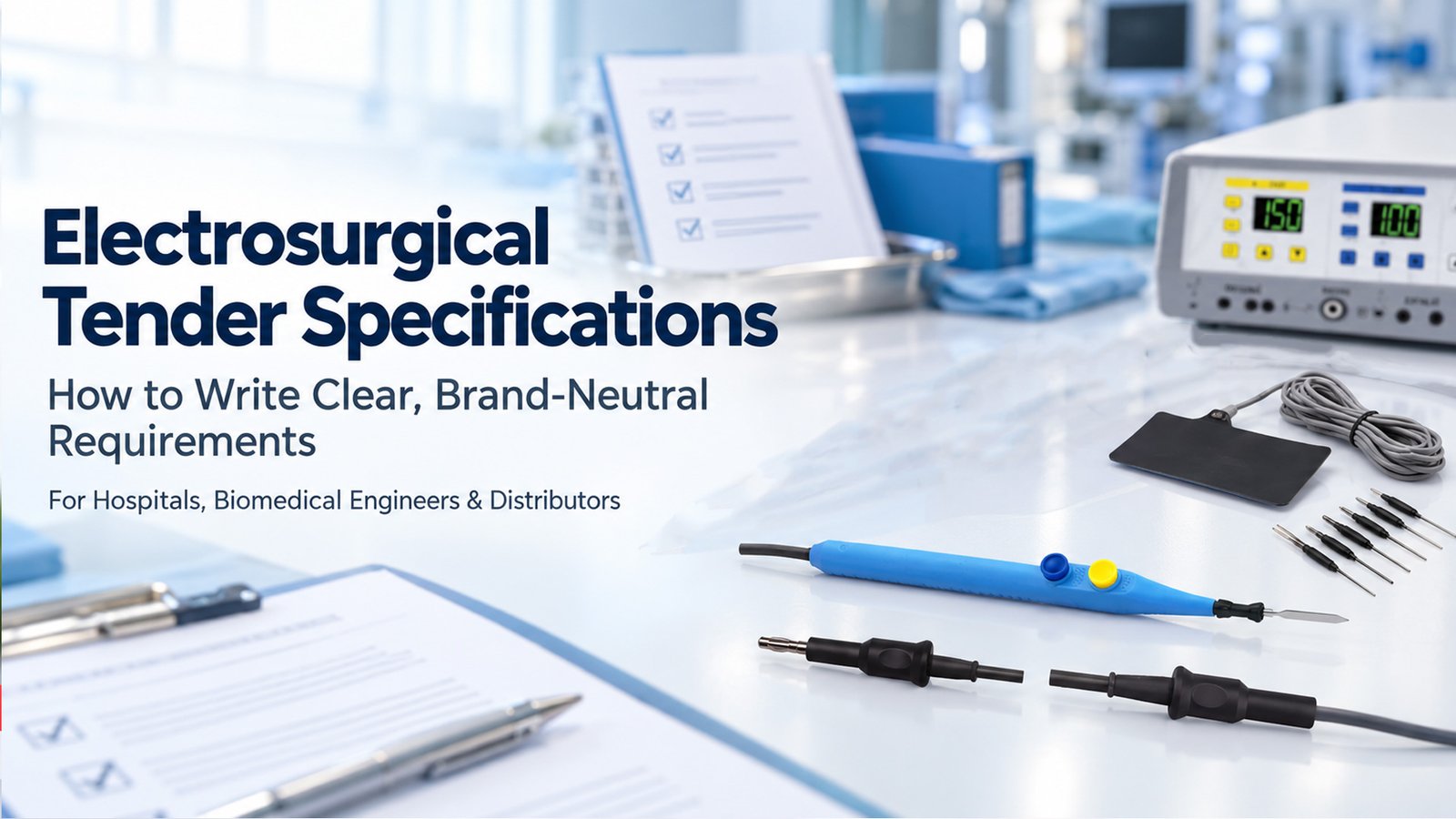
 A vague specification such as “bipolar forceps, good quality” invites offers that cannot be compared and products that do not fit the hospital’s generators. Clear specifications protect the hospital, the surgical team and fair competition between suppliers. This guide shows hospital procurement teams, biomedical engineers and the distributors who respond to tenders how to specify bipolar forceps, diathermy pencils, electrosurgical cables and patient return electrodes.
A good tender specification for electrosurgical accessories is functional and brand-neutral. It states product type, dimensions, connector and generator compatibility, reusable or single-use status, sterility and shelf life, packaging and required regulatory documents, and it sets clear sample and evaluation criteria so offers can be compared fairly.
Start with the Installed Base
Before writing any specification, list the electrosurgical generators in each operating theatre, including brand, model and available outputs. Generator compatibility is the single most important requirement for accessories, because a product that meets every other specification is unusable if it cannot connect to the installed generator. Specify compatibility by generator model rather than by accessory brand.
Example Specification Fields by Product
| Product | Key fields to specify |
|---|---|
| Bipolar forceps | Shape (straight, bayonet, angled); overall length; tip width; non-stick or standard tips; connector type; reusable or single-use; reprocessing method validated in the IFU |
| Diathermy pencils | Hand or foot control; electrode supplied; electrode shaft diameter; cable length; generator compatibility; sterile single-use or reusable |
| Electrosurgical cables | Bipolar or monopolar; instrument-end connector; generator-end connector by generator model; length; reprocessing method |
| Patient return electrodes | Split or solid; patient size range; cable included or separate; connector by generator model; shelf life; storage conditions |
| Active electrodes | Type (blade, needle, ball, loop); shaft diameter; working length; coated or uncoated; single-use or reusable |
Product-level guidance is available in the bipolar forceps selection guide, cautery pencil selection guide, electrosurgical cable compatibility guide, patient return electrode selection guide and active electrode types guide.
Writing Brand-Neutral Requirements
Specifications written around one brand’s catalogue numbers restrict competition and can conflict with procurement rules. Functional wording achieves the same clinical result:
- Instead of a brand’s product code, state the shape, length, tip width and connector.
- Instead of “original accessories only”, state “compatible with the installed generator model, confirmed by sample testing”.
- Use tolerance ranges for dimensions where exact values are not clinically necessary.
Naming a generator model to define compatibility is different from requiring an accessory brand. The first describes a technical need; the second limits who can offer.
Regulatory and Quality Documents to Request
- A valid AKL marketing authorisation number for each imported product. See the AKL registration guide for electrosurgical imports.
- The manufacturer’s current quality management system certificate, such as ISO 13485.
- Product specifications that match the offered product codes.
- Instructions for use, including reprocessing instructions for reusable items.
- Sterility and shelf-life information for sterile single-use items.
Hospitals should apply their own procurement policies and the government procurement regulations that apply to them.
Samples and Evaluation
- Request samples for each product line and test them on every installed generator model.
- Involve end users, such as theatre nurses and surgeons, in structured evaluation.
- Score offers against published criteria: compatibility, specification compliance, documentation, price and supply reliability.
- Record the approved product codes so reorders match what was evaluated.
Guidance for Distributors Responding to Tenders
Distributors win more tenders when they answer every specification field directly, provide a compatibility table for the hospital’s generators, and submit complete documents with matching product codes. Keeping registration, labelling and catalogue data consistent avoids disqualification on technical grounds. Distributors building their own range may also consider private-label electrosurgical instruments.
Supporting Tender Submissions with ERMC
Electro Range MFG Co. (ERMC) manufactures bipolar forceps, diathermy pencils, active electrodes, cables and patient return electrodes in Sialkot, Pakistan, and can provide product specifications and documentation for distributors preparing tender responses. Learn more about electrosurgical instrument supply for Indonesia.
This article offers general procurement guidance and is not legal advice. Follow applicable procurement regulations and institutional policies.
Frequently Asked Questions
What should a tender specification for electrosurgical accessories include?
It should state the product type, key dimensions, connector and generator compatibility, reusable or single-use status, sterility and shelf life for single-use items, packaging, regulatory documents required, and any sample or evaluation requirements.
Should tender specifications name a specific brand?
Specifications are generally written in brand-neutral, functional terms so that qualified suppliers can compete. Generator brands may be named only to define compatibility, for example “compatible with the installed generator model”.
Which documents should suppliers submit with an electrosurgical accessory tender in Indonesia?
Typically a valid AKL marketing authorisation number for each product, the manufacturer’s quality management certificate, product specifications, and instructions for use. Hospitals should follow their own procurement rules and applicable government regulations.