



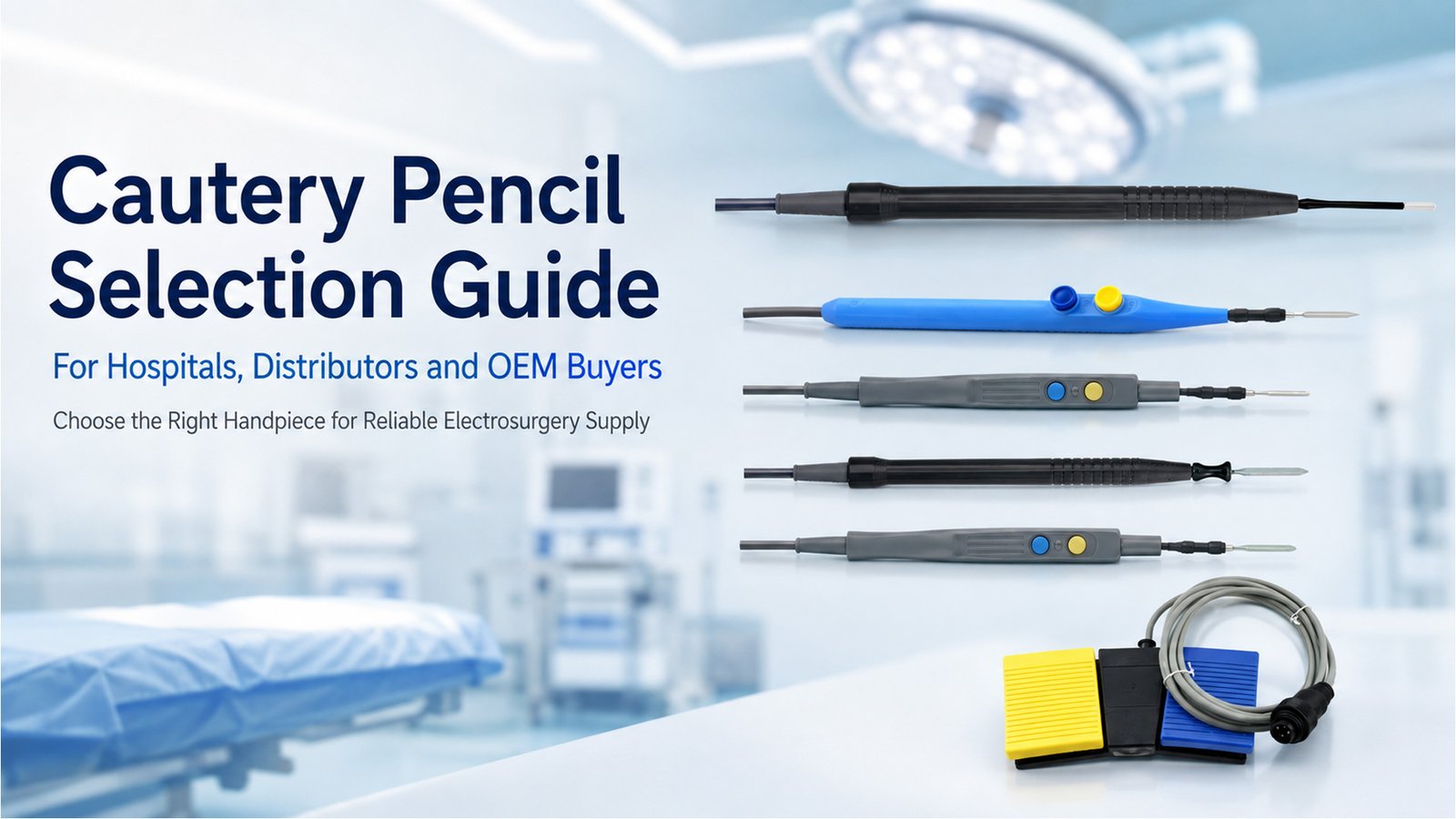
 One Small Handpiece Can Expose a Big Gap in an Electrosurgery Supply Programme
A Cautery Pencil may be a compact component, but it sits at a critical point between the surgeon, the electrode and the electrosurgical generator. If the handpiece is uncomfortable, poorly sealed, incorrectly connected or unsuitable for the required electrode, the weakness becomes visible quickly.
For hospitals, distributors and OEM buyers, selecting the right Cautery Pencil means looking beyond a simple hand-control or foot-control label. Buyers need to consider activation method, electrode fit, cable and generator compatibility, insulation, sealing, ergonomic balance, reusable or single-use status and the documentation required for the destination market.
This guide explains the main product types and provides a practical evaluation framework for building a dependable cautery handpiece range.
What Is a Cautery Pencil?
A Cautery Pencil, also described as an electrosurgical pencil or diathermy cautery handpiece, is a handheld monopolar accessory used to hold an active electrode and activate compatible electrosurgical energy. Depending on the design, activation occurs through buttons on the handpiece or through a separate foot switch connected to the electrosurgical unit.
The handpiece forms part of a larger system. The selected electrode, cable, connector, generator and return-electrode arrangement must all be compatible with the intended use. Product selection should follow the manufacturer’s specifications and approved instructions rather than visual similarity alone.
Why Cautery Pencil Quality Matters to Procurement Teams
A hospital needs a handpiece that supports the required workflow and feels controlled in the user’s hand. A distributor must provide that experience consistently across samples, initial orders and reorders.
A well-managed Cautery Pencil range can support:
- Clear hand-control and foot-control options for different theatre preferences.
- Compatible electrode shaft sizes and connection types.
- Reusable and sterile single-use purchasing programmes.
- Defined article numbers, cable lengths and packaging formats.
- More efficient OEM, distributor and hospital evaluations.
These benefits depend on disciplined product selection. Listing many versions without explaining their differences usually creates confusion rather than commercial value.
Main Types of Cautery Pencils and Handpieces
Hand Control Cautery Pencils
Hand Control Cautery Pencils include activation controls on the handpiece. Common designs provide separate cut and coagulation buttons so the user can activate the selected mode without operating a foot switch.
When evaluating hand-control models, buyers should assess button position, tactile response, identification of the controls, resistance to unintended activation, sealing around the control area and compatibility with the required generator connection.
Foot Control Cautery Pencils
Foot Control Cautery Pencils are activated through a compatible foot switch rather than buttons on the handpiece. This creates a simpler handpiece profile and allows activation to remain under foot control.
The ERMC category includes options for 1.6 mm, 2.4 mm and 4.0 mm shafts, along with a universal configuration for 1.6 mm and 2.4 mm shafts. Buyers should confirm the exact electrode diameter, connector, cable and generator requirements before choosing a model.
Detachable Cautery Handpieces
Detachable Cautery Handpiece designs use separable components where permitted by the product specification. They may support a reusable workflow or make particular components easier to manage, but their connections, assembly steps and reprocessing instructions require careful review.
Buyers should confirm which components are reusable, replaceable or single use. They should also check how the product is assembled, inspected and stored after reprocessing.
Single-Use Diathermy Cautery Pencils
Single-Use Diathermy Cautery Pencils are supplied for one procedure and may be selected for facilities that prefer a sterile, procedure-ready format. Their evaluation should include sterile packaging, shelf life, cable length, electrode configuration, labelling and disposal requirements.
A single-use product should not be selected only because it removes reprocessing. Buyers must compare the total procedural cost, storage needs, waste responsibilities and supply continuity with the reusable alternative.
Hand Control or Foot Control: What Is the Difference?
| Feature | Hand Control | Foot Control |
| Activation | Buttons on the handpiece | Compatible external foot switch |
| Handpiece profile | Includes integrated controls | Typically simpler control surface |
| System check | Button function, cable and generator connection | Handpiece, foot switch and generator compatibility |
| Buying decision | Based on user preference and compatible system | Based on workflow, foot-switch setup and compatible system |
Neither activation method is universally better. The appropriate choice depends on the facility’s equipment, workflow, user preference and intended procedure.
Eight Checks Before Approving a Cautery Pencil
- Activation Method
Confirm whether the requirement is hand control, foot control or a detachable format. Product descriptions and packaging should make this distinction clear so buyers do not receive the wrong version.
- Electrode Shaft Compatibility
The handpiece must accept the intended electrode shaft correctly. Check the supported diameter, retention method and approved electrode configuration. A loose or incompatible fit cannot be corrected by assuming that nearby dimensions are close enough.
- Generator and Connector Compatibility
Document the generator connection and compatible system before ordering. A connector that appears familiar may have different dimensions, pin arrangements or intended compatibility. For foot-control models, include the foot switch in the system review.
- Cable Length and Flexibility
Cable length affects theatre setup, while flexibility and strain relief influence handling. Buyers should confirm the standard cable specification and ensure that the evaluated sample matches future production.
- Body Sealing and Insulation
Inspect the handpiece body, joints, control area, cable entry and insulation. ERMC describes its reusable cautery handpieces as having an ultrasonic-sealed body designed to resist high-pressure autoclave steam. Product-specific reprocessing limits and instructions should still be confirmed before purchase.
- Button Response and Identification
For hand-control models, the cut and coagulation controls should be clearly identified and provide a consistent response. Samples should be evaluated for button placement, tactile feedback and ease of use while wearing surgical gloves.
- Ergonomic Profile
Diameter, weight, grip area and balance affect comfort and manoeuvrability. A slim design may be preferred, but the correct choice should come from representative sample evaluation rather than a marketing description.
- Reusable or Single-Use Requirements
Reusable products need clear cleaning, inspection, sterilisation and service-life guidance. Single-use products need appropriate sterile packaging, shelf-life evidence and traceability. Confirm the labelled status for every product reference.
Documentation Buyers Should Request
A responsible Cautery Pencil Manufacturer should be able to identify the documents applicable to the ordered product and destination market. Depending on the device and programme, buyers may need:
- Product specifications and article-number details
- Instructions for use and reprocessing information
- Applicable quality and conformity documentation
- Connector, electrode and generator compatibility information
- Labelling and packaging specifications
- Sterilisation and shelf-life information for sterile single-use products
- Traceability, complaint and change-control procedures
Documentation should relate to the exact product under review. A general company certificate is not a substitute for product-level information.
Reusable vs Single-Use Cautery Pencils
The choice between a reusable and single-use Cautery Pencil should be based on the facility’s workflow, reprocessing capability, storage, purchasing model and procedural requirements.
- Reusable handpieces may offer long-term value when correctly inspected and reprocessed within the manufacturer’s stated limits.
- Single-use pencils provide a sterile, procedure-ready option but require ongoing stock, shelf-life and waste management.
Procurement teams should compare the total cost and operational fit of both formats. The lowest unit cost does not always represent the lowest cost per procedure.
What Distributors and OEM Buyers Should Ask a Supplier
- Which hand-control, foot-control and detachable variants are available?
- What electrode shaft sizes does each article accept?
- Which generator connections and cables are supported?
- What reusable-life or reprocessing information applies?
- Which products are supplied sterile and single use?
- Can samples be approved against a controlled specification?
- What packaging, labelling and OEM options are available?
- How are product changes communicated to established buyers?
Clear answers at the evaluation stage reduce misunderstandings after the first order and make the range easier for sales teams to position.
Why Buyers Consider Electro Range MFG Co.
Electro Range MFG Co. offers reusable hand-control, foot-control and detachable cautery handpieces, along with sterile single-use options. The company highlights a slim ergonomic profile, heat-resistant materials, an ultrasonic-sealed body, responsive cut and coagulation controls and autoclave durability for its reusable range.
These products form part of ERMC’s broader Electrosurgery product portfolio. Buyers should request the exact specification, compatibility information and documentation for the articles they plan to evaluate.
Frequently Asked Questions
Is a Cautery Pencil the same as an electrosurgical pencil?
The terms are often used for the handheld accessory that holds an active electrode and connects to a compatible monopolar electrosurgical system. Product naming varies, so buyers should confirm the exact specification rather than relying on terminology alone.
What is the difference between hand-control and foot-control cautery pencils?
A hand-control model uses buttons on the handpiece. A foot-control model is activated through a compatible foot switch. The correct option depends on the generator, theatre setup and user preference.
Can one Cautery Pencil accept every electrode?
No. Electrode shaft diameter, retention design and approved compatibility can differ. Confirm the supported electrode specifications for each handpiece.
Are cautery pencils reusable?
Both reusable and single-use products are available. Follow the labelled status and manufacturer’s instructions for the exact article.
What should be included in a quotation request?
Specify hand or foot control, electrode shaft size, generator connection, cable length, reusable or single-use status, quantity, destination market, packaging and OEM requirements.
Why should buyers evaluate a physical sample?
A sample allows assessment of grip, button response, cable flexibility, electrode retention and connector fit—details that cannot be confirmed from a photograph.
Choose a Cautery Pencil Range That Fits the Complete System
A dependable Cautery Pencil programme begins with system compatibility and ends with consistent repeat supply. Activation method, electrode fit, cable connection, sealing, ergonomics and documentation should all be reviewed before approval.
Explore ERMC Cautery Pencil and diathermy handpiece options or email info@electrorange.com to request specifications, samples, OEM information or a quotation.
Related Electro Range Articles