



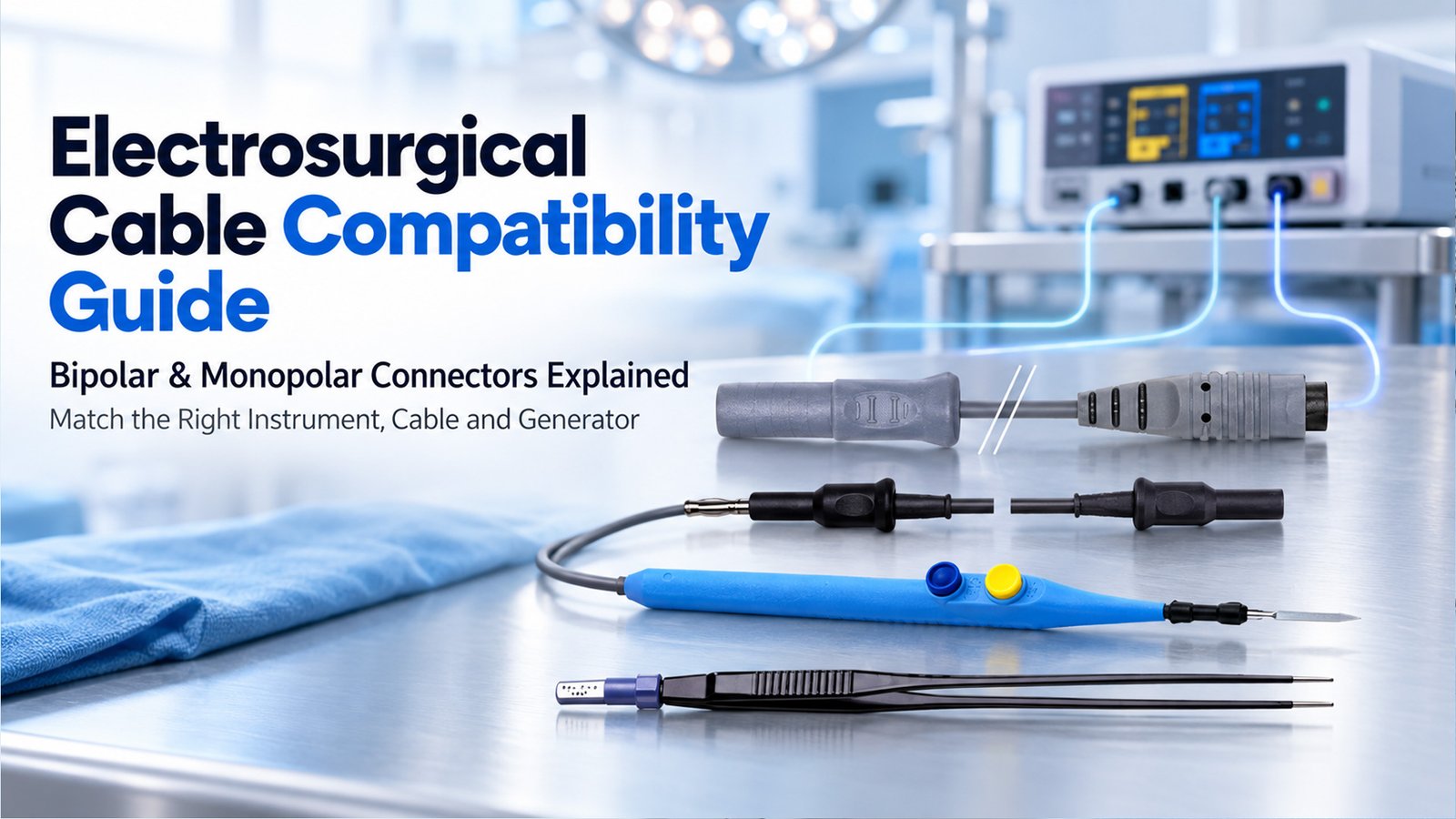
 An electrosurgical cable has two jobs: connect the instrument to the generator safely, and do it with the connectors the operating room already uses. Most ordering errors happen because only one end of the cable was specified. This guide explains how bipolar cables and monopolar cables are matched to bipolar forceps, monopolar instruments and electrosurgical generators, and what distributors and hospitals should specify before ordering.
An electrosurgical cable is compatible only when both ends match: the instrument end must fit the forceps or electrode connector, and the generator end must fit the socket of the specific generator model. To order correctly, specify cable type (bipolar or monopolar), instrument connector, generator brand and model, length, and reusable or single-use.
Why Both Ends of the Cable Matter
Instrument connectors are fairly standardised, but generator sockets are not. A hospital may run generators from two or three manufacturers across different theatres, and each can require a different generator-end plug. A cable that fits the forceps perfectly is still unusable if its generator plug does not match the socket in that theatre.
For distributors, this means cables should be sold as part of a compatibility system, not as a standalone line item.
Bipolar Cable Connectors
Instrument end
Reusable bipolar forceps are commonly supplied with one of two connector styles:
- European flat two-pin connector: widely used on bipolar forceps in Europe and many export markets.
- US two-pin connector: two round pins, common on forceps intended for North American generators.
Some single-use bipolar forceps are supplied with an integrated cable, which removes the instrument-end decision but fixes the generator-end plug at the time of purchase.
Generator end
The generator end must match the bipolar output socket of the generator in use. Sockets differ between generator manufacturers and sometimes between models from the same manufacturer. Buyers should confirm the exact generator model rather than the brand name alone.
Monopolar Cable Connectors
Monopolar instruments such as monopolar forceps, suction coagulators and electrode handles commonly use a 4 mm plug at the instrument end. The generator end connects to the monopolar active output and, as with bipolar cables, must suit the specific generator.
Diathermy pencils with hand controls usually have an integrated cable whose plug carries the cut and coagulation switching contacts, so the pencil and generator compatibility should be checked together.
For background on how the two modes differ clinically and commercially, see bipolar vs monopolar electrosurgery.
What to Specify in an RFQ
| Specification | Why it matters |
|---|---|
| Cable type (bipolar or monopolar) | Determines connector design and the generator output used. |
| Generator brand and model | Defines the generator-end plug. Model matters, not just brand. |
| Instrument connector | European flat two-pin, US two-pin or 4 mm monopolar plug. |
| Length | Must reach from the sterile field to the generator without tension; 3 m is a common length. |
| Reusable or single-use | Affects unit cost, reprocessing workload and stock planning. |
| Reprocessing method (reusable cables) | The cable must be validated for the hospital’s sterilisation method according to its instructions for use. |
Sending a clear photo of the generator socket and the instrument connector with the enquiry prevents most mismatches.
Inspecting and Replacing Reusable Cables
Reusable cables are exposed to repeated reprocessing, bending and handling. Hospitals and their biomedical engineering teams should inspect cables before each use and remove them from service when any of the following is found:
- Cracked, cut, swollen or discoloured insulation.
- Exposed conductors or damage near the strain relief at either end.
- Kinks or permanent deformation from tight coiling.
- Loose, bent or corroded connector pins.
- Intermittent or unreliable function during use.
Coiling cables loosely during reprocessing and storage, rather than wrapping them tightly around instruments, reduces stress on the insulation and connector joints and helps extend usable life.
Always follow the cable manufacturer’s instructions for use and the hospital’s own equipment policies.
Guidance for Distributors in Indonesia
Indonesian hospitals often operate generators from several manufacturers, acquired at different times or through different tenders. Distributors who keep a compatibility matrix for each hospital account, listing generator models, instrument connectors and matching cable codes, can quote faster and avoid returns.
Cables are also regulated medical devices. Registering cables together with the instruments they connect to keeps the offer usable from day one. The AKL registration guide for importing electrosurgical instruments into Indonesia explains the registration process.
ERMC Electrosurgical Cables
Electro Range MFG Co. (ERMC) manufactures bipolar and monopolar electrosurgical cables alongside its bipolar forceps, monopolar instruments and diathermy accessories in Sialkot, Pakistan. Buyers can send their generator models and instrument connectors to receive matching cable options for their installed base. Learn more about electrosurgery equipment supply for Indonesia.
Generator and instrument brand names are trademarks of their respective owners and are referenced only to describe compatibility.
Frequently Asked Questions
Are bipolar cables universal across electrosurgical generators?
No. The instrument end and the generator end of a bipolar cable each use a specific connector type, and generator sockets differ between manufacturers. A cable is only compatible when both ends match the forceps and the generator in use.
What information is needed to order the right electrosurgical cable?
The generator brand and model, the instrument connector type, whether the cable is bipolar or monopolar, the required length, and whether a reusable or single-use cable is needed. A photo of the generator socket and the instrument connector helps avoid errors.
When should a reusable electrosurgical cable be removed from service?
When inspection shows cracked, cut or discoloured insulation, exposed conductors, kinks, loose or bent connector pins, or intermittent function. Hospitals should also follow the manufacturer’s instructions for use and their own biomedical engineering policies on cable life.
Can one cable connect instruments from different manufacturers?
Yes, when the instruments share the same connector type. Many bipolar forceps use standard European flat or US two-pin connectors, so a cable with the matching instrument end can serve forceps from several manufacturers, provided the generator end also matches.