



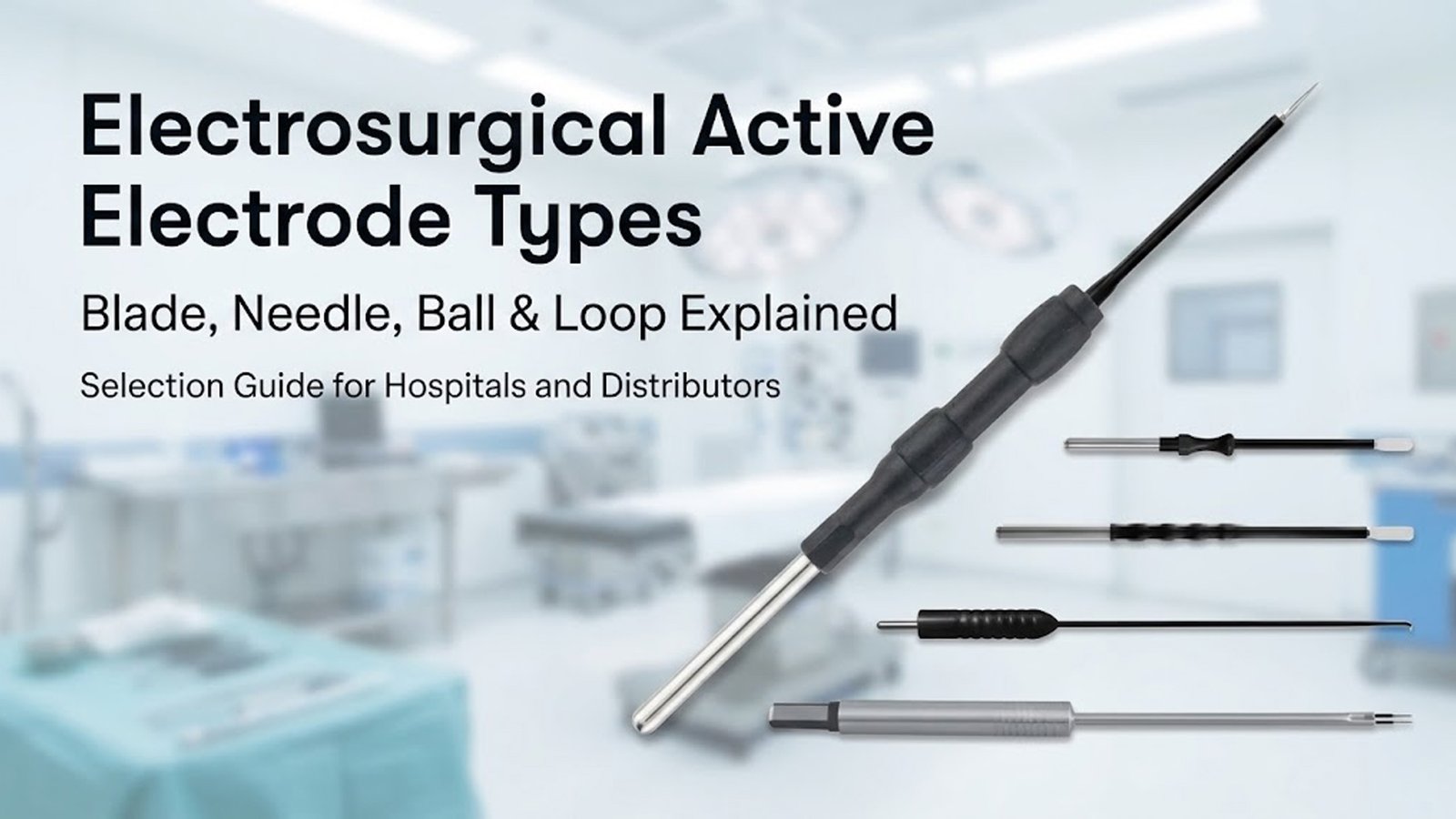
 The active electrode is where electrosurgical energy meets tissue, and its shape largely determines the surgical effect. Hospitals and distributors stock a wide range of blade, needle, ball and loop electrodes, often in several lengths and with coated or uncoated tips. This guide explains the main designs and how to build a practical electrode range.
Active electrodes deliver monopolar current to tissue, and their shape controls current concentration. Blade electrodes are general-purpose, needle electrodes allow precise dissection, ball electrodes suit surface coagulation, and loop electrodes are used for excision. Buyers should match shaft diameter to the pencil, choose suitable lengths, and decide between coated and uncoated tips.
How Electrode Shape Affects the Surgical Effect
In monopolar electrosurgery, current flows from the active electrode through the patient to the patient return electrode. A smaller contact area concentrates current density, which favours cutting and precise dissection; a larger, rounded surface spreads current, which favours coagulation. This is why a fine needle and a ball electrode behave differently at the same generator setting. Generator settings and technique remain clinical decisions made by the surgical team.
Main Electrode Types
| Electrode | Design | Typical application |
|---|---|---|
| Blade | Flat spatula-shaped tip | General cutting and coagulation; the standard electrode supplied with many pencils |
| Needle | Fine pointed tip, including micro dissection needles | Precise dissection where fine control is needed |
| Ball | Spherical tip in several diameters | Coagulation of surface areas |
| Loop | Wire loop in various shapes and sizes | Excision procedures, such as LLETZ/LEEP in gynaecology |
| Extended and angled | Longer or bent shafts of the above designs | Access to deeper or angled operative fields |
Coated vs Uncoated Electrodes
Non-stick coated electrodes are designed to reduce tissue adhesion and eschar build-up, which helps keep performance consistent during longer procedures. Coated tips must be wiped with a suitable sponge or pad rather than scraped, because abrasion damages the coating. Uncoated stainless steel electrodes are a lower-cost option widely used for routine procedures.
Eschar on an electrode tip reduces efficiency and can prompt higher power settings. Keeping the tip clean during use, with the method suited to its surface, supports consistent performance.
Shaft Diameter and Compatibility
An electrode only fits a pencil or handle whose socket matches its shaft. A 2.4 mm shaft is a common standard for diathermy pencil electrodes, while some handles and specialty electrodes use other sizes. Confirm shaft diameter, working length and single-use or reusable status before ordering.
Building an Electrode Range as a Distributor
- Start with high-use items: standard blade electrodes and common needle and ball sizes.
- Add length options: extended versions for hospitals performing deeper procedures.
- Offer coated variants: for accounts that prioritise reduced tissue adhesion.
- Add specialty lines by demand: micro dissection needles and loop electrodes for specific departments.
- Match to pencils: confirm every electrode code fits the pencils you supply.
For Indonesia, electrodes are regulated medical devices and need a valid marketing authorisation. The AKL registration guide for electrosurgical imports explains the process.
ERMC Active Electrodes
Electro Range MFG Co. (ERMC) manufactures active electrodes, including blade, needle, ball and loop designs and micro dissection needles, together with diathermy pencils, cables and return electrodes, in Sialkot, Pakistan. Learn more about electrosurgery equipment supply for Indonesia, or read the Bahasa Indonesia panduan memilih pensil kauter.
This article is for procurement and general information. Electrode selection and generator settings for clinical use are the responsibility of the surgical team and must follow the manufacturer’s instructions for use.
Frequently Asked Questions
What is an active electrode in electrosurgery?
The active electrode is the small electrode at the tip of a monopolar pencil or handle that delivers current to tissue. Its shape concentrates current density to produce cutting or coagulation, while the patient return electrode completes the circuit.
What is the difference between blade, needle and ball electrodes?
Blade electrodes are general-purpose and used for cutting and coagulation. Needle electrodes concentrate current on a fine point for precise dissection. Ball electrodes spread current over a rounded surface and are typically used for surface coagulation.
Are electrosurgical electrodes interchangeable between pencils?
Only when the electrode shaft diameter matches the pencil’s socket. A 2.4 mm shaft is a common standard for pencil electrodes, but buyers should confirm the shaft size before ordering.
Why use a coated electrode?
Non-stick coated electrodes are designed to reduce tissue adhesion and eschar build-up on the tip, which can help keep performance consistent during a procedure. The coating must not be scraped, so tips are wiped with a suitable sponge or pad.