



 A Return Electrode Is Not Just a Disposable Pad—Every Contact and Connection Detail Matters
Single-use neutral electrode plates form part of the patient return pathway in compatible monopolar electrosurgical systems. Although these products are frequently called patient plates, return electrodes, grounding pads or diathermy pads, their selection should be based on the exact product specification—not the familiar name alone.
Plate size, patient category, adhesive characteristics, cable arrangement, connector compatibility, packaging and monitoring-system requirements can all affect suitability. Hospitals, distributors and OEM buyers therefore need a structured product approval process before introducing a new reference.
What Is a Neutral Electrode Plate?
A neutral electrode plate, also known as a patient return electrode, provides the return pathway used by a compatible monopolar electrosurgical system. It is different from the active electrode held by the operator.
The active electrode delivers energy at the operative site, while the return electrode is designed to complete the circuit through its intended contact area and connection system. The product must be selected, applied and used according to its instructions and the requirements of the compatible electrosurgical generator.
ERMC’s Single-Use Neutral Electrode Plates category provides a relevant starting point for procurement review.
Why Plate Selection Requires More Than Checking the Connector
A connector match is essential, but it does not establish complete suitability. Buyers should also confirm:
- The intended patient category.
- The plate dimensions and conductive contact area.
- The plate construction and monitoring configuration.
- The adhesive and backing material.
- Whether a cable is integrated or supplied separately.
- The generator and return-electrode monitoring requirements.
- Packaging, shelf life and storage conditions.
- Product identification and traceability.
A product that connects to the equipment should not be approved until these additional factors have been reviewed.
Adult and Paediatric Neutral Electrode Plates
Adult neutral electrode plates and paediatric neutral electrode plates are developed for different labelled patient categories and product specifications. Buyers should never choose between them by visual judgement or price alone.
The approved selection must follow the product instructions, generator requirements and the organisation’s clinical protocols. Exact dimensions, weight limitations or patient-category restrictions should be confirmed from the selected reference.
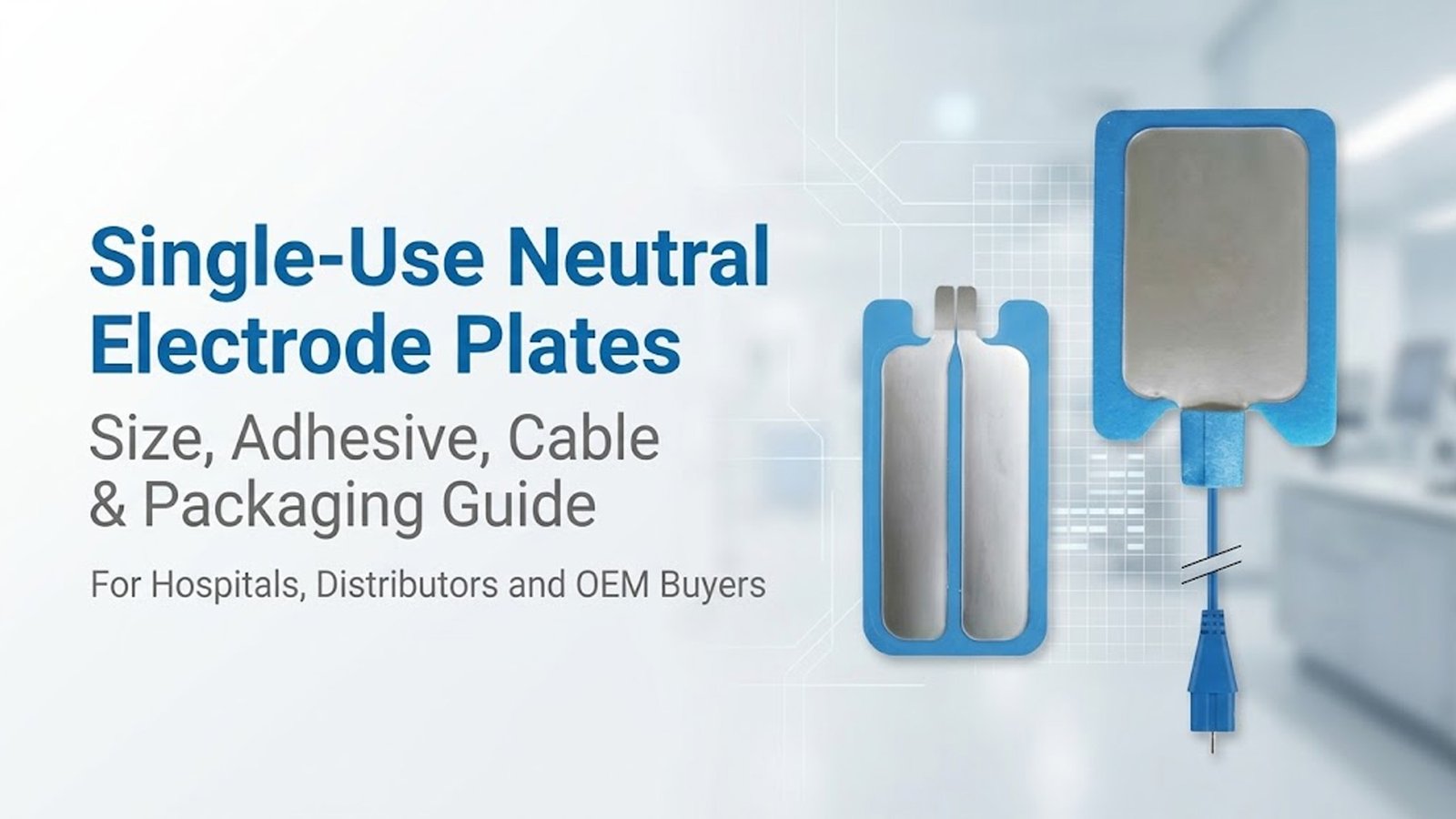
Solid and Split Return Electrode Designs
Return electrodes may be offered in different conductive-area configurations. Where solid and split designs are available, they should not be treated as automatically interchangeable.
A split plate may be associated with a compatible return-electrode monitoring arrangement, while another system may require a different configuration. Buyers should confirm the generator’s monitoring technology and the plate manufacturer’s compatibility information before approval.
Cabled and Non-Cabled Plates
Some disposable neutral electrode plates may include an integrated cable, while others connect through a reusable or separately supplied pad electrode cable.
This distinction affects ordering, setup, storage and equipment compatibility. A plate without the required cable or connector cannot be treated as a complete replacement for a pre-cabled reference.
Product Comparison for Buyers
| Selection Area | Questions to Ask | Risk of Incomplete Review |
| Patient category | Is the reference intended for adult, paediatric or another labelled category? | An unsuitable size or patient-category reference may be selected |
| Plate design | Is it solid, split or another specified configuration? | The product may not align with the generator monitoring system |
| Adhesive | What are the application, contact and removal instructions? | Local users may apply the product outside its instructions |
| Cable | Is the cable integrated, detachable or separately supplied? | An incomplete or incompatible setup may be ordered |
| Packaging | What are the storage, shelf-life and pack-integrity requirements? | Expired or damaged stock may remain in circulation |
Ten Checks Before Procurement Approval
- Confirm the Intended Generator
Record the electrosurgical generator manufacturer, model, return-electrode socket and monitoring requirements. Use the equipment documentation when establishing compatibility.
- Identify the Patient Category
Determine which labelled plate category is required. Adult and paediatric references should have distinct product identification and purchasing controls.
- Review Plate Dimensions
Confirm the full plate dimensions and intended contact area from the technical specification. Similar-looking products can have materially different sizes.
- Confirm Solid or Split Construction
Where this distinction applies, match the plate construction to the intended generator and monitoring system. Do not substitute one design without technical review.
- Review Adhesive Information
Request information covering application, contact, storage and removal. Clinical personnel should follow the product instructions and local policies when selecting and applying the plate.
- Verify the Cable Arrangement
Confirm whether the product includes an integrated cable or requires a separate one. For separate cables, verify both the plate-side connection and generator-side plug.
- Confirm Single-Use Labelling
A single-use patient return electrode should be handled according to its product labelling. It should not be reprocessed or reused unless the manufacturer explicitly provides a different validated instruction.
- Examine Packaging and Shelf Life
Review the individual pack, outer carton, expiry information, storage conditions and pack-integrity requirements. Stock rotation should be part of the purchasing plan.
- Approve Labelling and Traceability
The product code, batch or lot information, patient category, single-use designation and relevant compatibility information should be clearly identifiable.
- Complete Local Clinical and Technical Review
Final approval should involve appropriately qualified clinical, biomedical and procurement personnel. The product must be assessed within the intended equipment and operating workflow.
Adhesive Quality and Product Handling
The adhesive system helps maintain the plate’s intended contact according to the product instructions. Buyers should avoid unsupported claims such as “suitable for every skin type” or “guaranteed not to lift”.
Instead, the product review should focus on documented construction, labelled use, packaging integrity and evaluation within the organisation’s approved process. Storage conditions can also influence product condition, so cartons should be managed according to the stated requirements.
Common Procurement Mistakes
- Ordering a plate only by its general shape or colour.
- Assuming adult and paediatric plates are interchangeable.
- Ignoring solid or split plate requirements.
- Checking the plate connector without verifying the generator.
- Failing to determine whether a separate cable is required.
- Combining products and cables that have not been approved together.
- Purchasing excessive stock without considering expiry dates.
- Allowing an undocumented substitute during a repeat order.
Single-Use vs Reusable Neutral Electrodes
Single-use neutral electrode plates and reusable patient plates support different operational models. Single-use products require recurring stock, expiry control and disposal planning. Reusable products require cleaning, inspection, processing and service-life management according to their instructions.
The purchasing decision should consider the complete workflow rather than comparing unit prices alone. Buyers can review ERMC’s broader Electrosurgical Patient Plates range when comparing available formats.
Distributor and OEM Supply Planning
Distributors should separate references by patient category, plate design, cable configuration and generator compatibility. A clear compatibility chart can help sales and technical teams answer enquiries without relying on visual assumptions.
OEM buyers should approve the plate, cable, packaging and labelling as one documented configuration. If any component changes, the effect on compatibility and product presentation should be reviewed before further supply.
Why Review ERMC Single-Use Neutral Electrode Plates?
ERMC includes single-use neutral electrode plates within its wider Sterile Single-Use Electrosurgical range. The wider portfolio also includes pad electrode cables and reusable patient plate options for professional comparison.
Exact sizes, plate designs, cable arrangements, packaging and generator compatibility should be confirmed for the requested model.
Frequently Asked Questions
Is a neutral electrode plate the same as a grounding pad?
The terms are often used informally for patient return electrodes, but modern product selection should follow the exact technical terminology and system documentation.
Can an adult plate be used instead of a paediatric plate?
Do not make substitutions based on appearance. Use the product intended and labelled for the relevant patient category and follow the applicable clinical protocol.
Do all disposable neutral plates include a cable?
No. Some configurations may include a cable, while others require a separate compatible pad electrode cable.
Can any split plate work with a monitored generator?
Compatibility should not be assumed. Confirm the plate, cable, connector and generator monitoring requirements as a complete system.
Can neutral electrode plates be supplied for OEM programmes?
OEM feasibility depends on the plate specification, quantities, packaging, labelling, documentation and destination market.
Request Product and Compatibility Information
Send ERMC the required patient category, plate design, generator model, cable arrangement, pack quantity and estimated annual demand. These details support a more accurate single-use neutral electrode plate recommendation.