



 A Sterile Instrument Is Only as Reliable as the System Behind Its Seal
A sterile pouch may be the first thing a buyer notices, but it is not the first place product reliability begins. Before a pair of Single-Use Forceps reaches a hospital, decisions about materials, insulation, tip design, sterilisation, packaging, labelling, storage and traceability have already shaped its suitability for the intended supply programme.
For hospitals, distributors and OEM buyers, selecting Single-Use Forceps therefore requires more than confirming that an instrument is supplied sterile. The exact configuration must fit the intended procedure and electrosurgical system, while the documentation and packaging must support the destination market.
This guide explains how to compare sterile single-use forceps, what to request from a manufacturer and which details deserve attention before product approval.
What Are Single-Use Forceps?
Single-Use Forceps are instruments labelled and supplied for one procedure. Within an electrosurgical range, they may include bipolar or monopolar designs and can be supplied in different lengths, tip profiles, connector configurations and packaging formats.
Unlike reusable instruments, they are not intended to enter a repeated cleaning and sterilisation cycle. Their purchasing value lies in providing an identified, procedure-ready product with controlled packaging and traceability. The labelled intended use and manufacturer’s instructions must always determine how the product is handled.
Single-Use Bipolar and Monopolar Forceps
Single-Use Bipolar Forceps
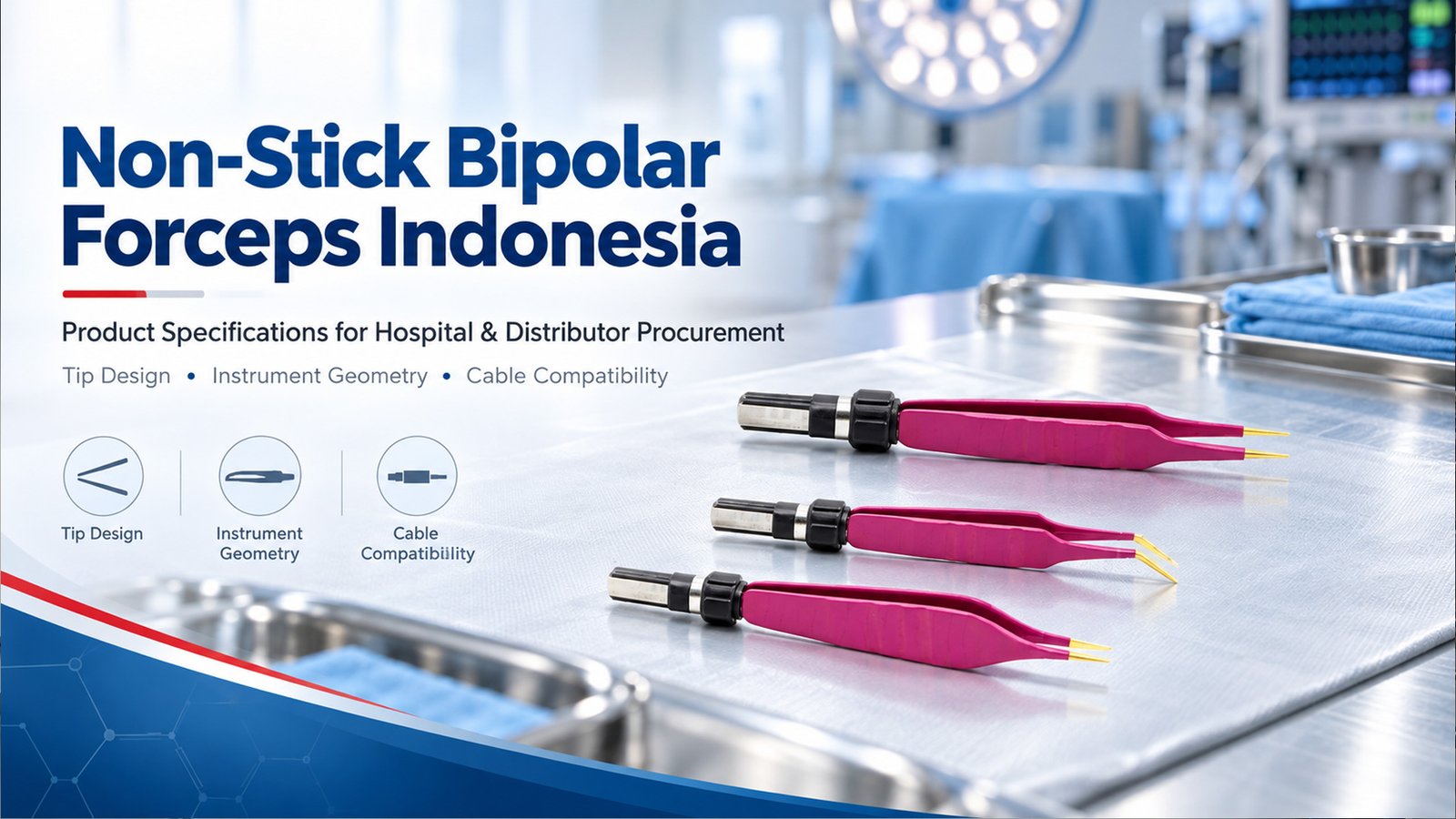
Single-Use Bipolar Forceps use two opposing tips as the poles of a bipolar circuit. Buyers may encounter straight, angled, bayonet or other specialised patterns depending on the manufacturer’s range.
The approval process should cover tip geometry, tine alignment, insulation, connector design, compatible cable or generator connection and any product-specific non-stick claim. Sterility does not remove the need to evaluate the instrument itself.
Single-Use Monopolar Forceps
Single-Use Monopolar Forceps form part of a monopolar electrosurgical system and require the appropriate system components for their intended use. Buyers should verify the forceps connection, cable, generator and return-electrode arrangement rather than treating the instrument as an isolated product.
Bipolar and monopolar forceps should be listed as separate product families. Clear descriptions reduce ordering errors and make it easier for distributors to communicate the correct use and compatibility.
Why Buyers Choose Single-Use Forceps
A facility may select Sterile Single-Use Forceps for several operational reasons:
- Procedure-ready supply without instrument reprocessing.
- Consistent packaging and product identification for each procedure.
- Simplified stock allocation for particular departments or procedure packs.
- A defined option for facilities with limited reprocessing capacity.
- Integration with other sterile single-use electrosurgical accessories.
These advantages only hold when supply continuity, storage, shelf life and waste responsibilities are properly managed. A disposable format solves one workflow problem but creates a continuing need for inventory planning.
Nine Checks Before Approving Single-Use Forceps
- Confirm the Intended Use and Configuration
Begin with the exact forceps pattern, working length, tip profile and intended electrosurgical system. Similar-looking products may have different connections or procedural purposes. Every quotation and sample should carry a clear article number.
- Inspect Tip Alignment and Closing Action
The tips should meet in a controlled and repeatable manner. Review alignment, closing pressure and the contact area between the tips. For Single-Use Bipolar Forceps, these details can affect how the instrument engages tissue and delivers energy within the approved system.
- Review Insulation and Connector Construction
Inspect insulation coverage, transitions near the working tip and the connection area. Confirm that the connector matches the required cable or generator input. Appearance alone is not proof of electrical or mechanical compatibility.
- Verify the Sterilisation Information
Request the sterilisation method, applicable validation information and product-specific documentation. The sterilisation claim should relate to the exact packaged device, not merely to the manufacturer’s facility.
- Examine the Sterile Barrier
The packaging should protect the product and maintain the sterile barrier throughout its stated shelf life when stored and transported as instructed. Buyers should assess seal quality, material condition, opening method and protection of the forceps tips.
- Check Labelling and Product Identification
Labels should identify the product, article number, lot or batch information, sterile status, single-use status, expiry details and other information required for the destination market. Product descriptions should remain consistent across labels, instructions, invoices and catalogues.
- Confirm Shelf Life and Storage Requirements
Shelf life affects forecasting and stock rotation. Ask how expiry is assigned and which storage conditions apply. Distributors should use stock-management practices that reduce the risk of ageing inventory.
- Evaluate Traceability and Complaint Handling
A manufacturer should be able to connect the packaged product to the relevant production and sterilisation records. Buyers should also understand how complaints are reported, investigated and closed.
- Assess Repeat Supply
Single-use programmes depend on ongoing availability. Discuss lead times, minimum quantities, forecasting, production capacity and change notification before demand grows. A technically acceptable product still creates risk if it cannot be replenished reliably.
Single-Use vs Reusable Forceps
| Consideration | Single-use forceps | Reusable forceps |
| Preparation | Supplied for one procedure in the labelled condition | Requires approved cleaning, inspection and sterilisation |
| Inventory | Continuous stock and shelf-life management | Instrument tracking and reprocessing capacity |
| Cost review | Cost per procedure and disposal | Purchase, reprocessing, inspection and replacement |
| Key documentation | Sterilisation, packaging, shelf life and traceability | Reprocessing, inspection and service-life guidance |
Neither format is automatically right for every facility. Procurement teams should compare workflow, total procedural cost, storage, reprocessing capacity, waste management and supply risk.
Documentation to Request From a Single-Use Forceps Manufacturer
- Product specification and article-number details
- Applicable instructions for use
- Quality and conformity documentation relevant to the device
- Sterilisation and sterile-barrier information
- Shelf-life and storage documentation
- Labelling and packaging specifications
- Traceability and complaint-handling procedures
- Market-specific documentation required by the buyer
Qualified regulatory personnel should review the documents against the exact device and destination market. A general certificate package should not replace product-level verification.
OEM and Procedure-Pack Considerations
For private-label programmes, agree on approved artwork, packaging materials, language versions, article numbers, minimum quantities and change control. If forceps are included in a sterile procedure pack, confirm the identity and compatibility of every component rather than approving the pack only as a single commercial item.
Electro Range MFG Co. lists sterile single-use forceps, electrodes, cautery pencils, neutral electrode plates, cables, connectors and customised procedure packs within its Single-Use Electrosurgical Instruments range. Buyers should request the exact pack configuration and supporting documentation before approval.
Frequently Asked Questions
Are Single-Use Forceps supplied sterile?
Many electrosurgical Single-Use Forceps are supplied sterile, but buyers must confirm the labelled condition, sterilisation method, packaging and instructions for the exact product.
Can Single-Use Forceps be reprocessed?
A product labelled for single use should be handled according to its labelling, manufacturer’s instructions and applicable facility or market requirements. Buyers should not infer reusability from the instrument’s appearance.
What is the difference between single-use bipolar and monopolar forceps?
They operate within different electrosurgical circuit arrangements and require appropriate compatible system components. Their connection and intended use must be confirmed separately.
What should distributors check on the packaging?
Review seal condition, product protection, article identification, lot information, sterile and single-use symbols, expiry details, storage information and market-required labelling.
Can sterile forceps be supplied under a private label?
Private-label options may be available subject to manufacturer capability and regulatory requirements. Responsibilities for branding, documentation, packaging and market placement should be agreed before production.
Build a Single-Use Forceps Programme Around More Than Sterility
The right Single-Use Forceps programme connects instrument design with sterile packaging, traceability, compatibility and dependable replenishment. When these elements are reviewed together, hospitals and distributors can make a stronger purchasing decision.
Explore ERMC Single-Use Forceps and sterile electrosurgical products or email info@electrorange.com to request specifications, samples, documentation, procedure-pack options or an OEM quotation.