



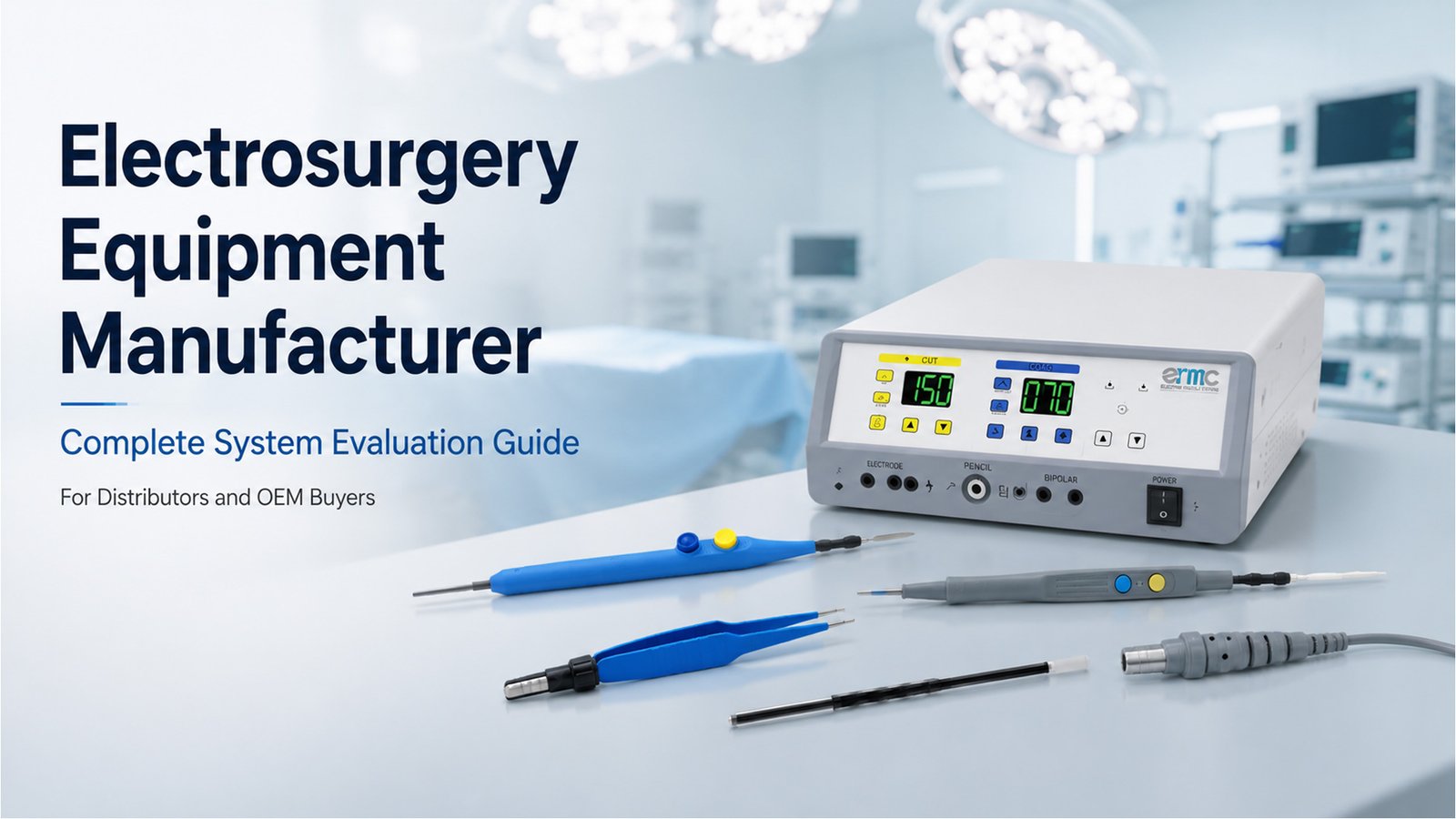
The Generator Is Only One Part of the Supply Decision
When buyers evaluate an Electrosurgery Equipment Manufacturer, attention naturally turns to the generator. Output, modes, controls and connection points matter, but the wider supply decision also includes compatible instruments, cables, electrodes, return components, accessories, documentation and after-sales support.
A generator that cannot be matched confidently with the buyer’s required accessories creates a fragmented supply programme. For distributors and OEM partners, a stronger evaluation asks whether the manufacturer can support the complete electrosurgical system from technical review through repeat supply.
This guide outlines the commercial and technical questions buyers should address before approving Electrosurgery Equipment or entering a long-term manufacturing relationship.
What Does an Electrosurgery Equipment Manufacturer Supply?
An Electrosurgery Equipment Manufacturer may supply electrosurgical generators along with selected instruments and accessories designed for compatible use. Depending on the range, the wider system can include:
- Bipolar Forceps and monopolar forceps
- Cautery Pencil and diathermy handpieces
- Diathermy Electrode options
- Connecting cables, adapters and foot switches
- Neutral or return electrode products
- Sterile single-use instruments and accessories
- System packs and essential operating-room accessories
The exact configuration must be based on the manufacturer’s approved specifications. Buyers should avoid mixing components unless compatibility has been confirmed.
Why Manufacturer Evaluation Must Go Beyond Price
Initial equipment price is visible and easy to compare. The longer-term costs of missing accessories, unclear documentation, delayed support or inconsistent replacement parts are less visible but often more disruptive.
A complete evaluation should consider:
- Equipment specification and intended use
- Compatible instrument and accessory range
- Quality and market documentation
- Installation, user information and technical support
- Warranty, servicing and complaint handling
- Replacement accessories and supply continuity
- OEM, labelling and packaging requirements
Ten Questions to Ask an Electrosurgery Equipment Manufacturer
- Which Equipment Models Match the Intended Market?
Ask for a clear comparison of available models, intended environments and product specifications. ERMC currently presents 150W and 400W diathermy machine categories, along with system-pack options. Buyers should request the exact specification for the model under consideration.
- Which Instruments and Accessories Are Compatible?
Request a documented compatibility list covering forceps, handpieces, electrodes, cables, return electrodes and foot switches. A complete quotation should identify required accessories rather than leaving them as an assumption.
- What Connection Standards Are Used?
Confirm every input and output connection relevant to the proposed system. Similar-looking sockets or plugs should not be treated as interchangeable without written confirmation.
- What Product and Quality Documentation Is Available?
Request documentation that applies to the exact equipment and destination market. The review may include technical specifications, instructions for use, quality-management information, conformity documents, labelling and market-specific registration details.
- What Testing Supports the Released Product?
Ask how finished equipment is inspected and tested before release. The manufacturer should be able to explain its process in a manner appropriate to the product without relying only on general quality statements.
- What Installation and User Information Is Provided?
Confirm what accompanies the product, including setup guidance, operating instructions, warnings, cleaning information and compatible accessories. Language requirements should be agreed for each market.
- How Are Warranty and Service Requests Managed?
Review warranty scope, exclusions, reporting procedures and service routes before purchase. Distributors should understand which issues can be handled locally and which require manufacturer involvement.
- Are Replacement Accessories Available?
Equipment remains commercially useful only when required accessories can be replenished. Discuss availability, article numbers, minimum quantities and lead times for cables, foot switches, handpieces and other replaceable components.
- What OEM Options Are Available?
For OEM projects, clarify branding, housing or interface limitations, labels, manuals, packaging, language versions, quantities and documentation responsibilities. Customisation should never create ambiguity about the legal manufacturer or device identity.
- How Are Product Changes Communicated?
Ask how the manufacturer controls and communicates changes to components, firmware where applicable, accessories, labels, packaging or technical documents. Change notification is particularly important after market approval.
Equipment Evaluation Table
| Evaluation area | What to request | Why it matters |
| Equipment specification | Model-specific technical information | Confirms suitability for the intended programme |
| Compatibility | Approved instruments and accessories | Prevents incomplete or mismatched systems |
| Documentation | Market-relevant product and quality files | Supports regulatory and purchasing review |
| After-sales support | Warranty, service and complaint route | Protects the programme after delivery |
| Repeat supply | Accessory lead times and article numbers | Keeps equipment usable over time |
Evaluate the Complete Electrosurgery System
Equipment should be reviewed with the products that will connect to it. A useful system map shows the generator, required cables, activation controls, instruments, electrodes and return components.
This approach helps distributors identify missing items early. It also supports clearer quotations because the customer can see which products are included, optional or purchased separately.
Documentation for Distributors and OEM Buyers
Documentation requirements vary by equipment model and market. A buyer may need:
- Technical specifications
- Instructions for use and setup information
- Applicable quality and conformity documentation
- Product labels and packaging artwork
- Compatible accessory lists
- Warranty and service policies
- Traceability and complaint procedures
- Change-control information
Qualified personnel should confirm that the supplied documents meet the requirements of the destination market before placement or use.
Common Equipment-Sourcing Mistakes
- Selecting equipment by wattage alone
- Assuming existing accessories will connect
- Failing to price required cables and foot controls
- Accepting generic documentation that does not identify the model
- Ignoring replacement-accessory lead times
- Discussing warranty only after a problem occurs
- Launching an OEM project without controlled labels and manuals
Why Buyers Consider Electro Range MFG Co.
Electro Range MFG Co. supplies Electrosurgery Equipment, instruments and accessories within one product structure. Its portfolio includes diathermy machine categories, forceps, cables, cautery handpieces, active electrodes, neutral electrodes, sterile single-use products and essential accessories.
This broader range can help buyers evaluate connected products through one manufacturer relationship. Exact compatibility, documentation and service arrangements should be confirmed for the proposed equipment configuration.
Frequently Asked Questions
What should buyers compare when choosing an Electrosurgery Equipment Manufacturer?
Compare equipment specifications, accessory compatibility, documentation, testing, warranty, service support, replacement supply, lead times and OEM capability.
Is generator wattage enough to select electrosurgery equipment?
No. Wattage is only one specification. Intended use, operating modes, connections, compatible accessories, documentation and support also require review.
Why should accessories be included in the evaluation?
The generator depends on compatible instruments, cables, controls and return components. Missing or mismatched accessories can delay installation and use.
Can electrosurgery equipment be supplied for OEM programmes?
OEM options depend on manufacturer capability and market requirements. Branding, labels, manuals, packaging, quantities and documentation responsibilities should be defined before production.
What after-sales questions should a distributor ask?
Ask about warranty coverage, service routes, complaint handling, technical response times and availability of replacement accessories.
Choose an Electrosurgery Equipment Manufacturer for the Full Programme
The right Electrosurgery Equipment Manufacturer should support more than a machine purchase. Compatibility, documentation, accessories, service and repeat supply determine whether the programme remains workable after delivery.
Explore ERMC Electrosurgery Equipment and instruments or email info@electrorange.com to request product specifications, compatible accessory information, OEM options or a quotation.