



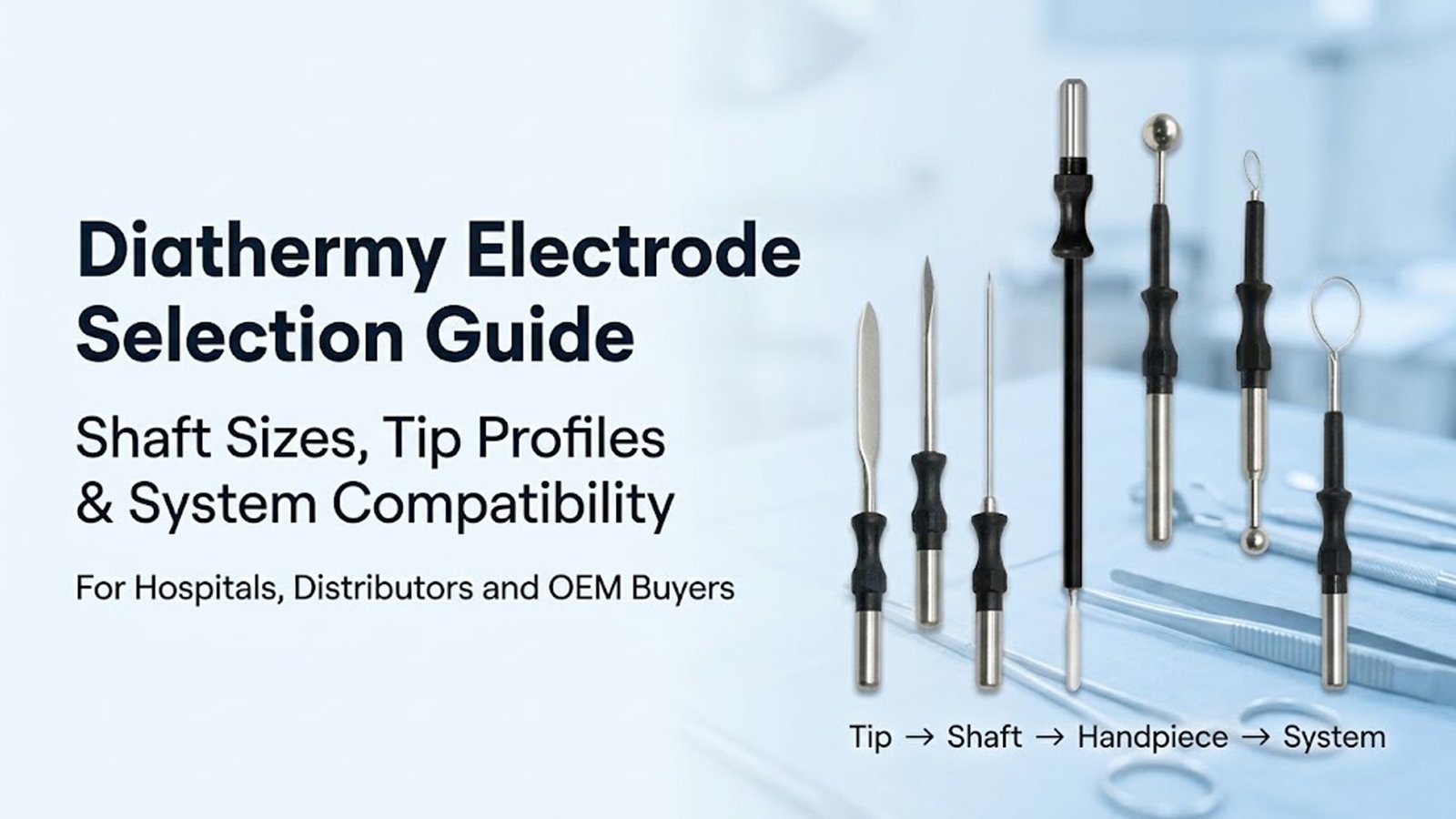
 The Wrong Electrode Can Turn a Small Specification Gap Into a Major Supply Problem
A Diathermy Electrode may appear straightforward on a product list, but its suitability depends on several connected details. Shaft diameter, working length, tip geometry, insulation, handpiece fit and generator compatibility all need to align with the intended electrosurgical system.
For hospitals, distributors and OEM buyers, selecting a Diathermy Electrode should therefore begin with the complete application rather than the tip shape alone. A blade, loop, ball or needle configuration only becomes useful when it fits the required handpiece and meets the relevant product specification.
This guide explains the principal electrode categories, the measurements buyers should confirm and the documentation needed before a product enters a professional supply programme.
What Is a Diathermy Electrode?
A Diathermy Electrode is an active electrosurgical accessory designed to deliver energy from a compatible handpiece and generator to the intended working tip. Electrode designs vary by shaft diameter, length, insulation and tip profile.
Depending on the product family, buyers may encounter general active electrodes, micro-dissection needles, arthroscopic electrodes, ENT bipolar electrodes and laparoscopic electrodes. Each category has its own connection and application requirements.
Selection should follow the manufacturer’s intended use, compatibility information and instructions. Similar dimensions do not automatically make two electrodes interchangeable.
Why Shaft Diameter Matters
The shaft must fit the selected Cautery Pencil or handpiece correctly. A mismatch can affect retention, alignment and system suitability.
Electro Range MFG Co. organises active electrodes into 1.6 mm, 2.4 mm and 4.0 mm shaft categories. Before ordering, buyers should confirm:
- The stated shaft diameter
- The handpiece model designed to accept it
- The insertion depth and retention method
- The insulated and exposed working length
- The compatible electrosurgical system
A dimension shown in a catalogue should be checked against the exact product reference and evaluated sample.
Common Diathermy Electrode Categories
Active Electrode Shafts
Standard active electrode ranges may include different tip shapes on 1.6 mm, 2.4 mm or 4.0 mm shafts. The required configuration depends on the handpiece and intended application.
Buyers should define the shaft and tip together in the article description. Listing only “active electrode” leaves too much room for ordering errors.
Micro-Dissection Needles
Micro-dissection electrodes use a fine working tip for applications requiring a narrow electrode profile. Tip dimensions, insulation transition and compatible power settings must come from the manufacturer’s approved information.
Because the working tip is fine, packaging should also protect it from bending or damage during transport and storage.
Arthroscopic Electrodes
Arthroscopic Electrode designs may differ in shaft construction, working length and tip orientation. Buyers should request the exact intended application and compatible equipment rather than selecting from appearance alone.
ENT Bipolar Electrodes
ENT Bipolar Electrode options are designed for defined otolaryngology requirements within a compatible bipolar system. Procurement teams should check electrode geometry, connection, insulation and product-specific instructions.
Laparoscopic Electrodes
Laparoscopic Electrodes have longer shafts intended for compatible laparoscopic systems. Working length, shaft diameter, insulation integrity and connector design are essential ordering details.
Electrode Selection Table
| Electrode category | Specification priority | Compatibility check |
| Standard active electrode | Shaft diameter, tip shape and exposed length | Handpiece fit and generator system |
| Micro-dissection needle | Fine-tip dimensions and packaging protection | Handpiece and approved use |
| Arthroscopic Electrode | Shaft, tip orientation and working length | Compatible arthroscopic system |
| ENT Bipolar Electrode | Bipolar geometry, insulation and connection | Compatible bipolar equipment |
| Laparoscopic Electrodes | Long shaft, insulation and distal tip | Compatible laparoscopic handpiece or system |
Eight Specifications Buyers Should Confirm
- Tip Shape
Blade, needle, ball, loop and other profiles serve different intended requirements. The tip name should be supported by a clear image, dimensions and article number.
- Shaft Diameter
Confirm the diameter in millimetres and match it with the required handpiece. Do not substitute a nearby size without manufacturer confirmation.
- Working Length
Record both total and working length where relevant. Longer instruments, particularly laparoscopic designs, require precise specification.
- Insulation Coverage
Inspect the insulated shaft, transitions and exposed working area. The delivered product should match the approved sample and product drawing.
- Handpiece Retention
The electrode should fit and remain secured in the approved handpiece. Sample evaluation should include insertion, retention and removal using the intended system components.
- Generator Compatibility
Compatibility should be documented across the electrode, handpiece, cable and electrosurgical generator. Product resemblance is not sufficient evidence.
- Reusable or Single-Use Status
Confirm whether the electrode is reusable or supplied as a Single-Use Active Electrode. Reusable products require appropriate inspection and reprocessing guidance; sterile single-use products require packaging and shelf-life controls.
- Packaging Protection
The tip and shaft should be protected from bending, puncture or insulation damage during storage and transport. Packaging must also carry the information required for correct identification.
Common Electrode-Sourcing Mistakes
- Ordering by tip name without confirming shaft size
- Assuming one handpiece accepts every electrode
- Approving from photographs without testing retention
- Failing to distinguish reusable and single-use products
- Using unclear article descriptions across quotations and labels
- Ignoring packaging protection for fine or extended tips
Documentation to Request
A professional Diathermy Electrode Manufacturer should provide product information relevant to the exact article and destination market. The buyer’s review may include:
- Product drawing or specification
- Tip, shaft and working-length details
- Compatibility information
- Instructions for use and reprocessing, where applicable
- Quality and conformity documentation
- Packaging and labelling specifications
- Sterilisation and shelf-life information for sterile products
- Traceability and change-control procedures
Why Buyers Consider Electro Range MFG Co.
ERMC’s Diathermy Electrode and active electrode range includes multiple shaft sizes and specialised categories, including micro-dissection, arthroscopic, ENT bipolar and laparoscopic options. This structure allows buyers to build a focused selection around specific handpieces and procedural requirements.
Distributors and OEM buyers should request exact article specifications, sample configurations, compatibility details and market-relevant documentation before commercial approval.
Frequently Asked Questions
What shaft sizes are available for Diathermy Electrodes?
ERMC lists active electrode categories with 1.6 mm, 2.4 mm and 4.0 mm shafts. Availability and tip combinations should be confirmed for the selected article.
Can one Diathermy Electrode fit every cautery pencil?
No. Shaft diameter, retention design and approved compatibility vary. Match the electrode to the exact handpiece specification.
What is the difference between a reusable and Single-Use Active Electrode?
A reusable electrode is handled according to its approved inspection and reprocessing instructions. A single-use electrode is supplied and labelled for one procedure, often in sterile packaging.
Why does insulation coverage matter?
Insulation forms part of the electrode’s designed energy pathway. Buyers should inspect its condition and confirm that coverage matches the approved specification.
What should be included in an electrode quotation request?
Include tip style, shaft diameter, working length, reusable or single-use status, handpiece compatibility, quantity, packaging and destination-market requirements.
Select Diathermy Electrodes as Part of the Complete System
A suitable Diathermy Electrode combines the required tip with the correct shaft, handpiece fit, insulation and electrosurgical system. Confirming those connections before ordering protects both product performance and repeat supply.
Explore ERMC Diathermy Electrode options or email info@electrorange.com for specifications, samples, compatibility information or an OEM quotation.