



An End-to-End Guide for Distributors and OEM Partners on Quality, Compliance, and Long-Term Reliability
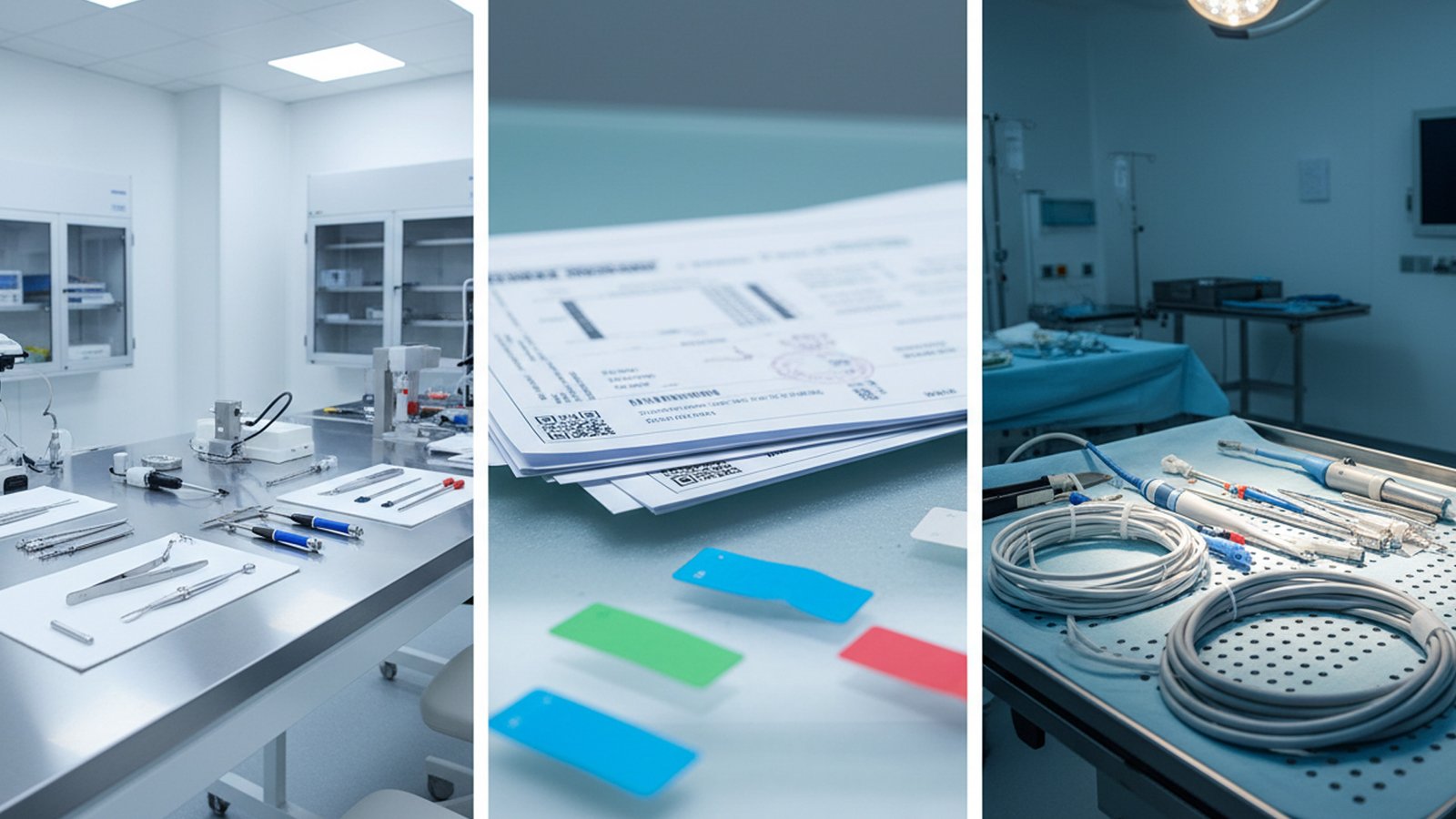
Introduction: Evaluation in Europe Starts Long Before the First Surgery
In Europe, an electrosurgical device is not judged only by how it performs in the operating room. It is evaluated long before that—on the manufacturing floor, in documentation reviews, during distributor audits, and throughout repeated procurement cycles.
European healthcare systems demand predictability, traceability, and accountability. For distributors and OEM partners, this means that choosing an electrosurgical manufacturer is not a product decision alone; it is a strategic commitment that affects compliance readiness, supply continuity, and long-term market credibility.
This guide follows the full journey of an electrosurgical device in Europe—from production to clinical use—and explains how hospitals, distributors, and procurement teams assess value at every stage.
Stage One: Manufacturing Discipline Sets the Foundation
The evaluation of an electrosurgical device begins where it is made. European buyers assume that a manufacturer’s internal processes will directly determine clinical reliability later on.
At this stage, distributors look closely at whether manufacturing is built around repeatable systems rather than ad-hoc production. Key considerations include:
- Controlled production workflows
- Consistent material sourcing
- Defined inspection and testing stages
- Clear separation between development and production changes
Inconsistent manufacturing may not always show up immediately, but in Europe it eventually surfaces through complaints, audit findings, or loss of hospital trust. This is why distributors prioritize manufacturers who treat process discipline as a core competency, not an internal detail.
Stage Two: Documentation Is Treated as a Clinical Asset
In European markets, documentation is not secondary to the device—it is part of the device. Hospitals, notified bodies, and procurement committees rely on documentation to validate safety, suitability, and traceability.
Electrosurgical manufacturers are evaluated on how well they provide:
- Clear technical descriptions
- Accurate product identification
- Consistent labeling and packaging information
- Instructions that align with real clinical use
Distributors often act as the bridge between manufacturer documentation and hospital expectations. When information is incomplete or inconsistent, the distributor absorbs the risk. For this reason, manufacturers with transparent and structured approaches to quality and compliance are seen as safer long-term partners.
Stage Three: Compatibility and System Integration
Electrosurgery in Europe rarely operates in isolation. Devices must integrate with generators, cables, accessories, and operating room workflows that vary by hospital and region.
Evaluation at this stage focuses on:
- Electrical compatibility with commonly used systems
- Stable energy transmission
- Reliable connector and interface design
- Minimal performance variation under repeated use
Compatibility issues often create downstream problems that surface only after deployment. Manufacturers who proactively design products with system-wide reliability in mind reduce troubleshooting burdens for both distributors and clinical teams.
Stage Four: Distributor Handling and Market Readiness
Before a device reaches the operating room, it passes through distributor warehouses, sales teams, and technical support channels. European distributors evaluate whether a manufacturer supports this stage effectively.
Key questions include:
- Is product information easy to communicate to hospitals?
- Are lead times realistic and consistently met?
- Can the manufacturer support regional labeling needs?
- Is OEM or private-label flexibility available?
Manufacturers who understand distributor realities—such as tender timelines and inventory planning—are more likely to become preferred partners rather than transactional suppliers.
Stage Five: Clinical Performance in Real Operating Rooms
Once in use, electrosurgical devices are judged on how they behave under real clinical conditions—not ideal test scenarios. Surgeons and operating room staff expect predictable performance from the first case to the last.
European hospitals observe:
- Consistency of energy delivery
- Ergonomics and handling stability
- Minimal variability across identical instruments
- Low failure or complaint rates
When performance aligns with expectations over time, confidence builds. When it does not, products are quietly removed from preference lists—often without formal feedback.
Reusable and Single-Use Devices: Evaluated Through Different Lenses
European healthcare systems apply different evaluation criteria to reusable and single-use electrosurgical devices.
Reusable instruments are assessed for:
- Durability over multiple cycles
- Resistance to wear and degradation
- Consistency after repeated sterilization
Single-use devices are evaluated based on:
- Sterility assurance
- Out-of-box performance consistency
- Workflow efficiency
Manufacturers that support both categories allow distributors and hospitals to select solutions based on procedure type, volume, and infection-control strategy—rather than forcing one model across all environments.
Stage Six: Long-Term Monitoring and Supplier Trust
In Europe, evaluation does not stop after product approval. Manufacturers are continuously assessed through:
- Complaint trends
- Supply consistency
- Communication responsiveness
- Willingness to address issues transparently
Trust is built quietly over time. Manufacturers who engage proactively and support distributors during challenges are more likely to retain long-term partnerships, even in competitive markets.
What This Means for European Manufacturers and Distributors
The European electrosurgical market rewards manufacturers who think beyond individual products. Success depends on understanding how devices are evaluated at every step—from production discipline to post-market reliability.
Distributors and OEM partners increasingly align themselves with manufacturers who:
- Demonstrate manufacturing maturity
- Provide structured documentation
- Support system-level compatibility
- Commit to long-term consistency
Exploring a manufacturer’s electrosurgical product portfolio alongside their quality and regulatory framework often provides a clear picture of readiness for European markets.
Looking Ahead: Evaluation Will Only Get Stricter
As Europe advances through 2026 and beyond, scrutiny around electrosurgical devices will intensify—not ease. Hospitals and distributors will continue to reduce risk by favoring manufacturers with proven systems, transparent practices, and stable supply models.
For those prepared, this environment creates opportunity. For those who are not, it becomes an increasingly high barrier to entry.
Let’s Talk About Your Manufacturing or Distribution Goals
If you are a medical device distributor, procurement professional, or OEM partner navigating the European electrosurgical landscape, we welcome a focused discussion on quality expectations, documentation readiness, and long-term supply planning.
📞 Call us: +92 321 610 0080
🌐 Website: https://electrorange.com/
📩 Distributor & OEM inquiries welcome